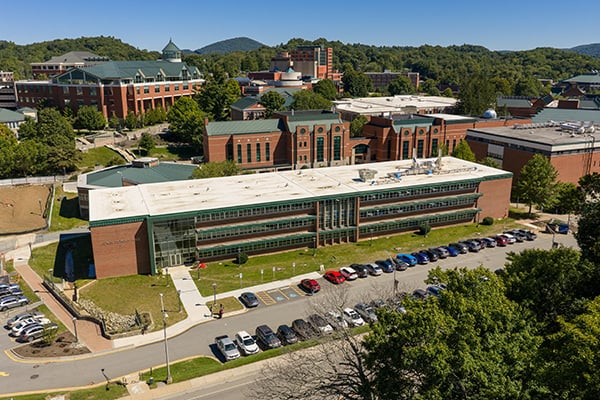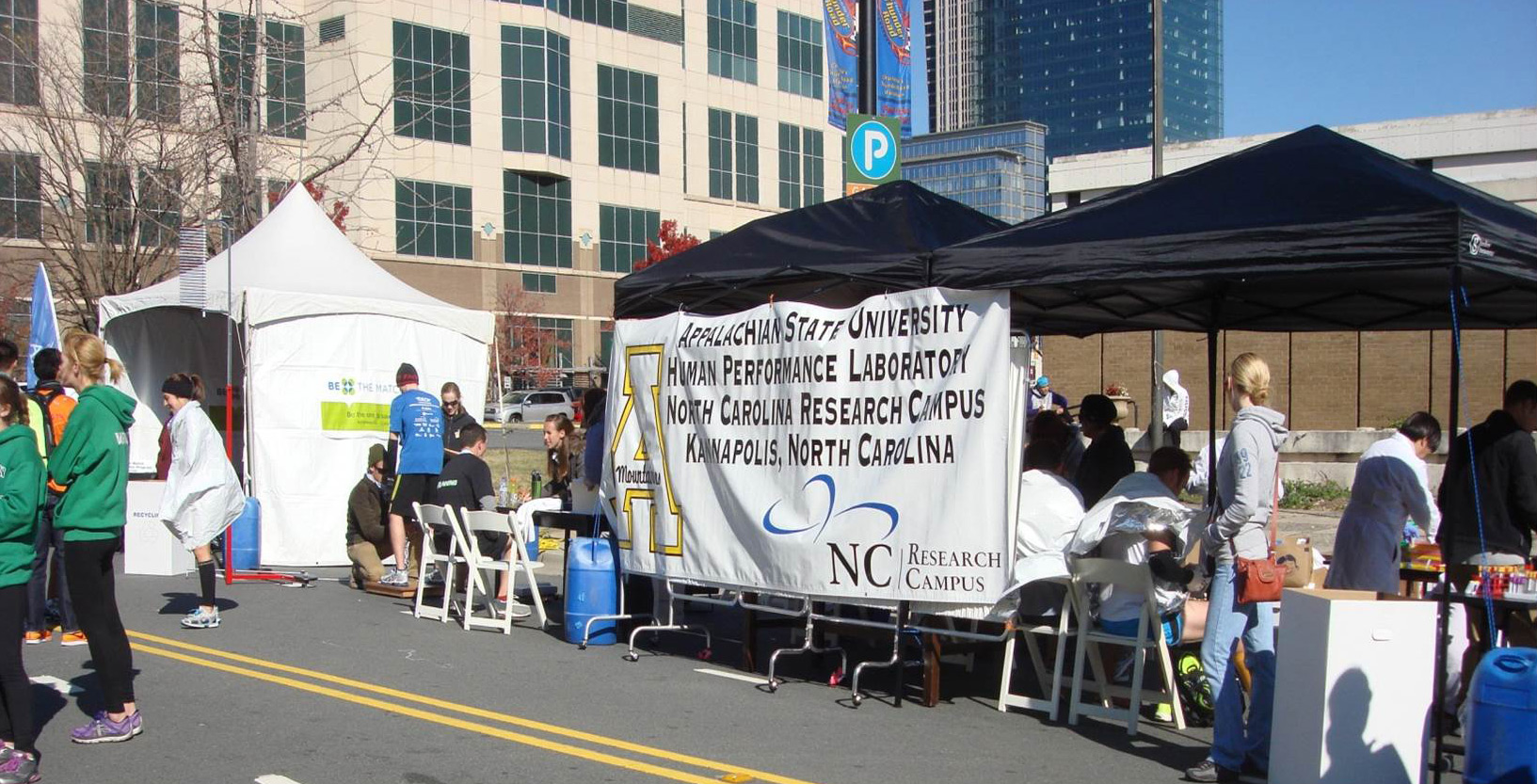
Researchers from Appalachian State University tested 48 marathon runners who participated in the 2012 Thunder Road Marathon in Charlotte to determine the effectiveness of the herb Rhodiola rosea, also known as arctic root or golden root, in combating post-race inflammation and oxidative stress. The study was conducted by researchers from Appalachian’s Human Performance Lab, part of the Beaver College of Health Sciences, is located at the N.C. Research Campus in Kannapolis. Photo submitted.
KANNAPOLIS—Human trials with marathon runners found that the herb Rhodiola rosea protects against viral infection. These findings build on previous human trials that demonstrate the anti-viral activity of blueberry and green tea polyphenols.
Both studies were led by David Nieman, DrPh, FACSM, director of the Appalachian State University Human Performance Laboratory at the NC Research Campus (NCRC) in Kannapolis.
Testing for anti-viral defense
Rhodiola rosea, also known as arctic root or golden root, is a member of the perennial herbaceous plant in the Crassulaceae family that is found at high altitudes in the Arctic and mountainous regions of Europe and Asia. The herb is credited with numerous health benefits including combatting fatigue and depression. Nieman’s study “Rhodiola rosea exerts antiviral activity in athletes following a competitive marathon race,” which was published July 31 in Frontiers in Nutrition, is the first to show anti-viral activity.
In his study, 48 marathon runners participating in the 2012 Thunder Road Marathon in Charlotte were randomly divided into two groups that ingested either 600 milligrams of Rhodiola rosea or a placebo for a month before the race. Blood samples were collected the day before the marathon and 15 minutes and 1.5 hours post-race. Initial studies found no impact on inflammation and oxidative stress. Additional studies used an in vitro assay to measure the ability of the polyphenolic compounds to protect the cells against Vesicular stomatitis virus. The results demonstrated that Rhodiola rosea delayed viral infection for up to 12 hours after the marathon.
Nieman was the first scientist to find that marathon runners are prone to viral illnesses such as upper respiratory tract infections after competing. This discovery motivated him to research plant-based compounds that could prevent infection and enhance recovery and overall athletic performance.
“Basically after heavy exertion, bacteria and viruses can multiply at a higher rate than normal due to factors in the serum like stress hormones and inflammatory cytokines,” Nieman said. “This is why runners are six times more likely to get sick after a marathon. We showed that in those who used Rhodiola rosea the viruses could not multiply, meaning it was acting as a countermeasure.”
The in vitro assay used in the study was developed by Nieman and Maryam Ahmed, PhD, an associate professor of biology at Appalachian who is a virology expert and study co-author.
“A lot of these types of compounds, you cannot test in humans,” Ahmed said. “So the really unique aspect of this study is that we gave these individuals the supplements, and we were able to test their blood in the lab using the experimental procedures that we developed to find out whether the compounds in the blood can protect cells against viruses.”
Using the specially developed assays, Ahmed and Nieman also identified a mix of polyphenolic compounds from green tea and blueberries that is even more effective than Rhodiola rosea at preventing viral replication in athletes after intense competition. Those findings were reported in the 2014 study “The Protective Effects of a Polyphenol-Enriched Protein Powder on Exercise-Induced Susceptibility to Virus Infection” that was published in the journal Phytotherapy Research. The study was led by Nieman in collaboration with the Dole Nutrition Institute and the NC State University Plants for Human Health Institute, both at the NCRC.
Beyond Athletes
Both Nieman and Ahmed assert that the anti-viral effects of polyphenols are beneficial to more than athletes. In a 2012 study published in the journal Nutrients, Nieman lead a 1,000 person community study that demonstrated people who eat three or more servings of fruit per day substantially reduced their incidence of upper respiratory tract infections.
“These compounds that we are looking at are not only for athletes,” Ahmed said. “They are also anti-oxidant and anti-cancer and have other properties that can benefit the general public.”
Nieman added, “We are producing some of the first human studies showing plant polyphenols − the naturally occurring chemicals in fruits and vegetables that give them their colors like purple, red and yellow − work with the immune system to help clear viruses and keep their ability to multiply under control.”
About Appalachian State University
As a premier public institution, Appalachian State University prepares students to lead purposeful lives. App State is one of 17 campuses in the University of North Carolina System, with a national reputation for innovative teaching and opening access to a high-quality, cost-effective education. The university enrolls more than 21,000 students, has a low student-to-faculty ratio and offers more than 150 undergraduate and 80 graduate majors at its Boone and Hickory campuses and through App State Online. Learn more at https://www.appstate.edu.
What do you think?
Share your feedback on this story.