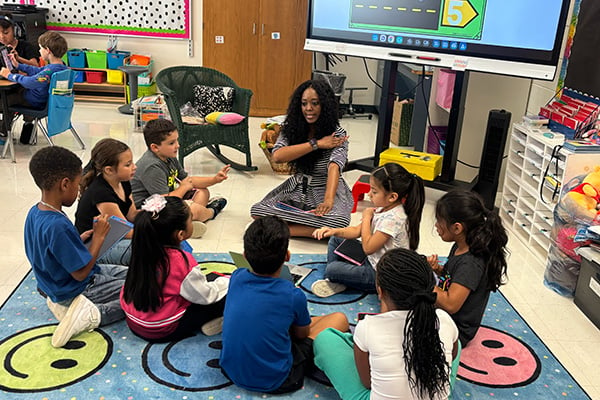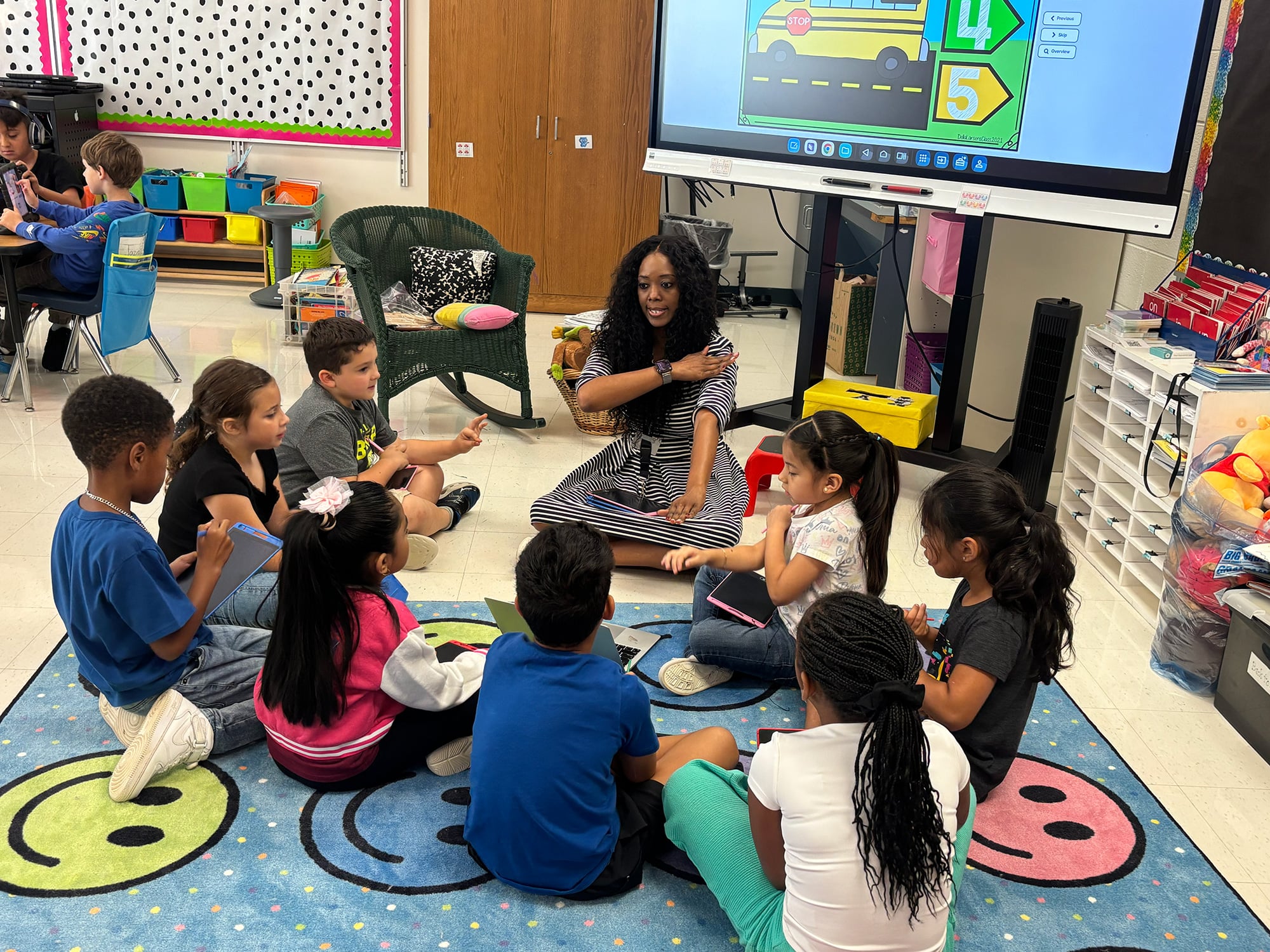
K–1 Appalachian State University Academy at Middle Fork teacher Kellie Sharpe works with students in small groups. Photo submitted
WALKERTOWN, N.C. — According to accountability data recently released by the North Carolina Department of Public Instruction (NCDPI), the Appalachian State University Academy at Middle Fork has experienced strong student achievement and growth over the past five academic years — reflecting substantial gains in student performance and academic outcomes.
The K–5 public elementary school in Forsyth County enrolls a record 322 students for the 2026–27 academic year and is one of six University of North Carolina System laboratory schools.
Among the most notable improvements, the academy increased its overall school performance score to 51, up 13 points from the previous year (2024–25 to 2025–26). In addition, the academy earned a growth score of 76, meaning the school met expected growth as determined by the state’s accountability model.
Under North Carolina’s accountability model, school performance scores are calculated using both student achievement (80% of the overall score) and academic growth (20% of the overall score). The academy’s achievement score of 45.3, combined with its growth score of 76, resulted in an overall school performance score of 51.
“These results demonstrate the impact of the Academy at Middle Fork’s innovative approach to teaching and learning and the extraordinary work of its faculty, staff and leadership team,” said Dr. Herb Brown, interim dean of App State’s Reich College of Education. “We are encouraged by this year’s gains and excited to see how this work continues to shape educational innovation and student success in North Carolina.”
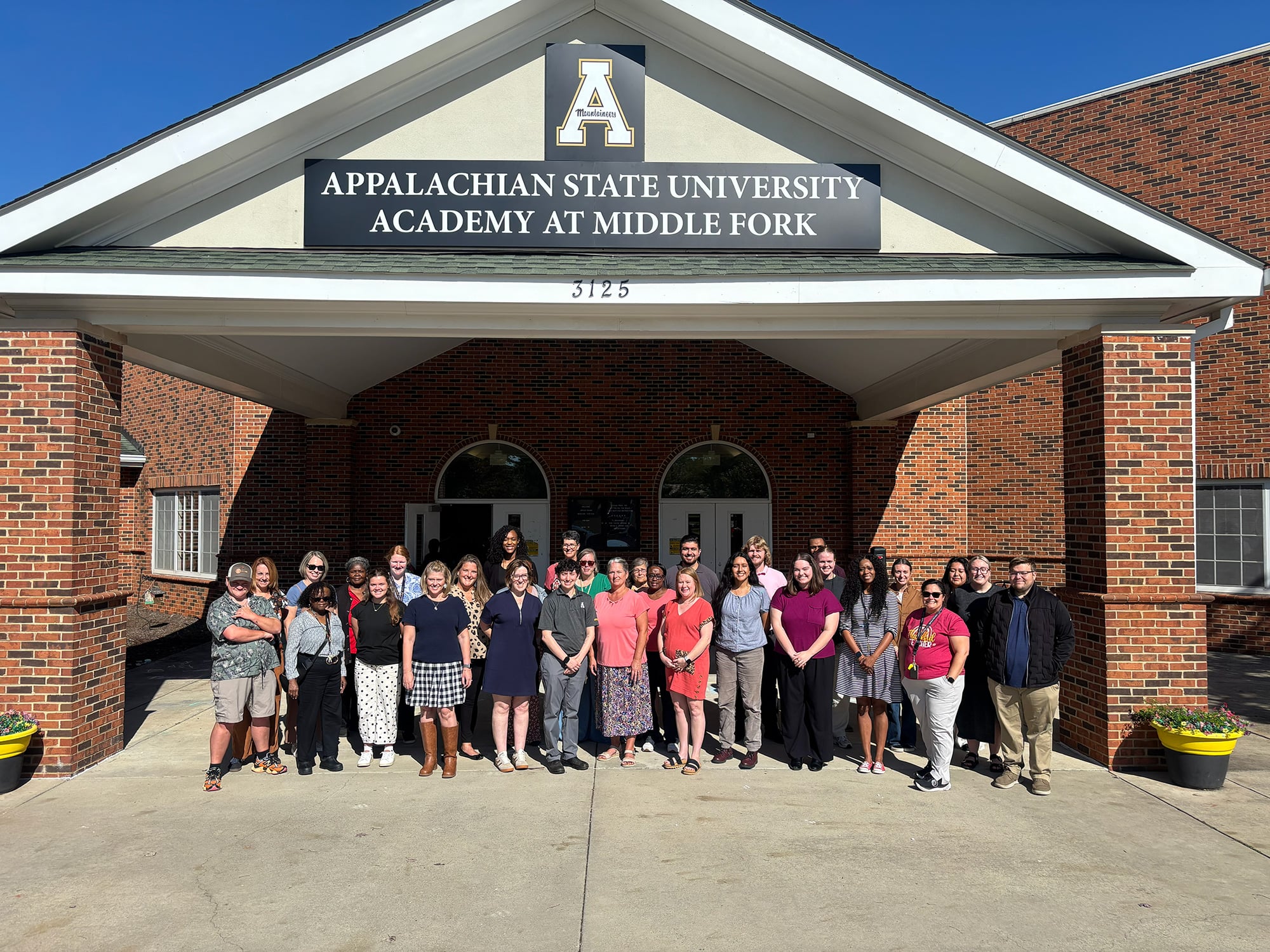
The staff, educators and leaders of the Appalachian State University Academy at Middle Fork in Walkertown are pictured in front of the school at the beginning of the 2026–27 academic year. Photo submitted
Additionally, the academy’s overall student proficiency rate (45.3%) increased 15.1 percentage points from 2024–25 to 2025–26, which was driven by significant proficiency gains across core subject areas:
- reading proficiency increased 13.2 percentage points, from 30.7% to 43.9%;
- math proficiency advanced by nearly 12 percentage points, from 33.6% to 45.5%; and
- science, tested at the fifth grade level, showed one of the most significant gains, growing by nearly 22 percentage points, from 28.3% to 50%.
For Dr. Amie Snow, the academy’s principal, the third grade results are especially meaningful. Half of the academy’s third graders demonstrated proficiency in reading and 57.5% showed proficiency in math — the highest third grade scores in the academy’s history, she shared.
“These results reflect the foundation our students have been building since first grade within our instructional model, where students can receive more individualized attention, instruction or further exploration of subject areas,” said Snow. “When students enter the upper elementary grades with strong reading and math foundations, it tells us that the intentional work happening in K–2 is preparing them not only for third grade but for continued success throughout grades 3–5.”
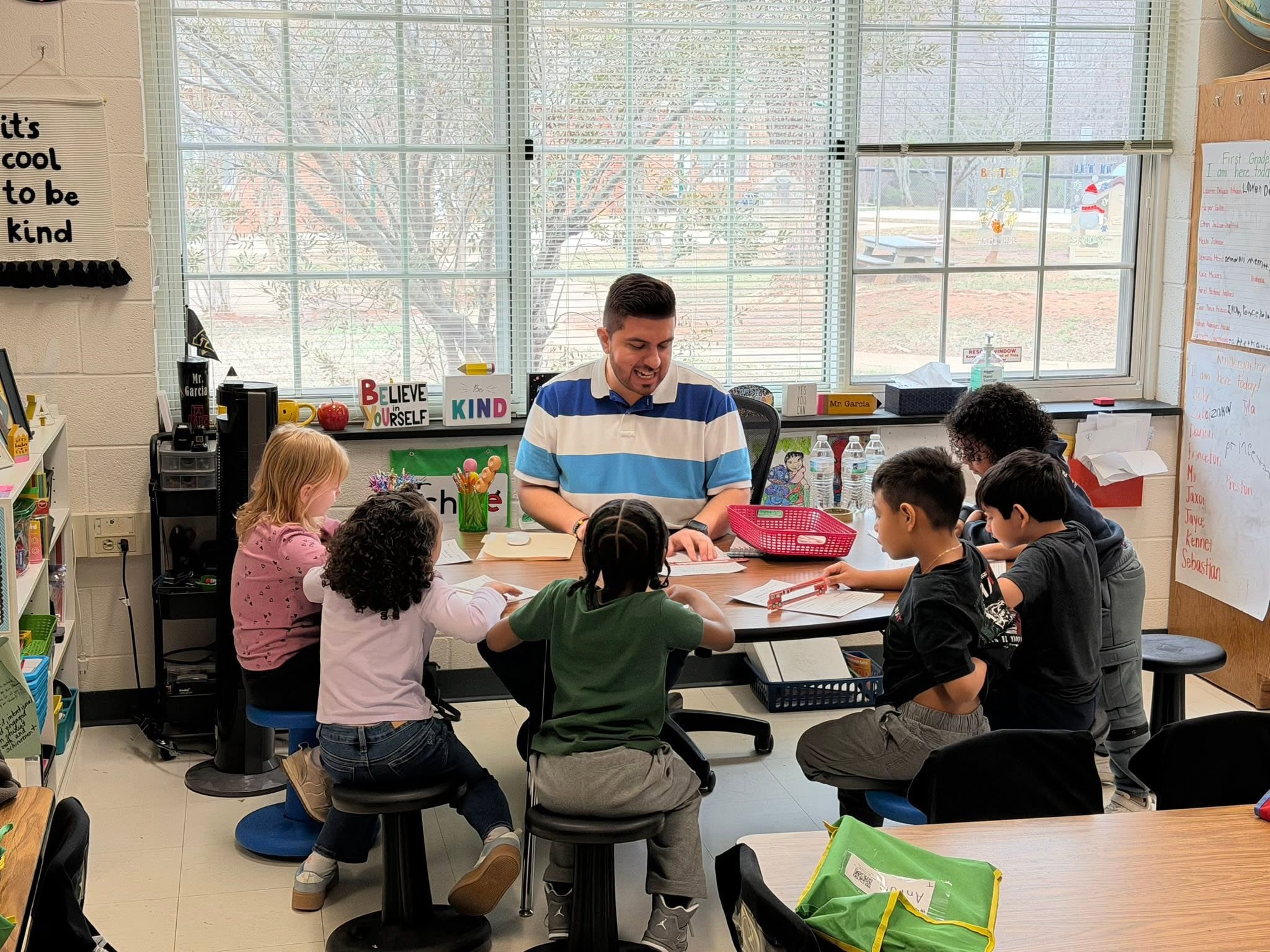
K–1 Appalachian State University Academy at Middle Fork teacher Jean Carlos Garcia Reyes ’20 ’21 works with students in small groups. Photo submitted
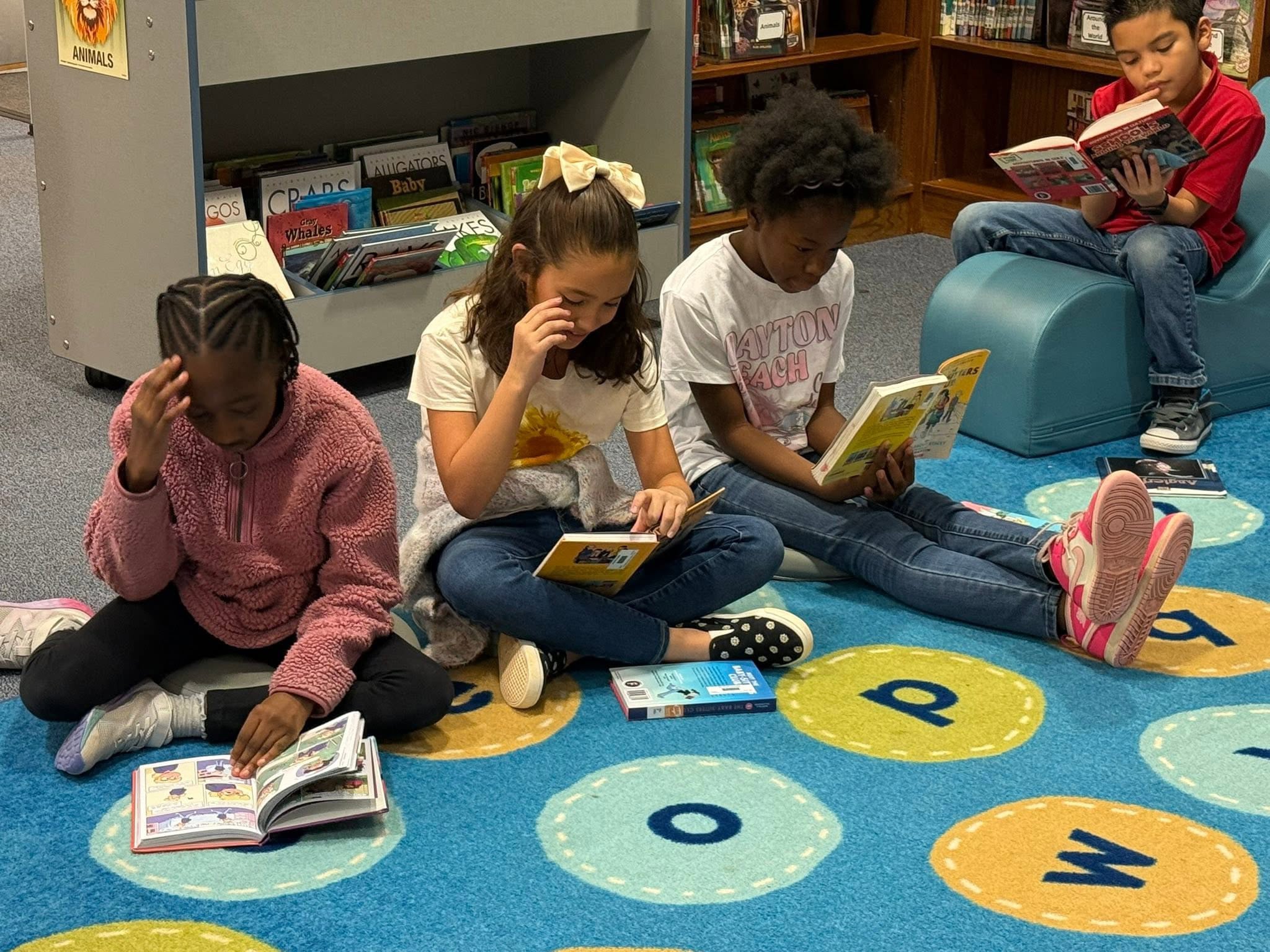
Academy at Middle Fork students utilize the school’s media center for dedicated reading time. Photo submitted
Driving progress forward
The academy’s gains are attributed to several instructional improvements implemented at the school over the past three years, including an innovative staffing and co-teaching model piloted in 2025 to support teacher retention and student success.
“We have been intentional about rethinking how we structure learning, how our educators work together and how we create the right supports and opportunities for every student,” said Emma Hatfield-Sidden, interim director of the lab school and director of clinical education in the Reich College of Education. “As a laboratory school, we have a unique opportunity to try new approaches, learn from what works and think differently about what school can look like for students and educators.”
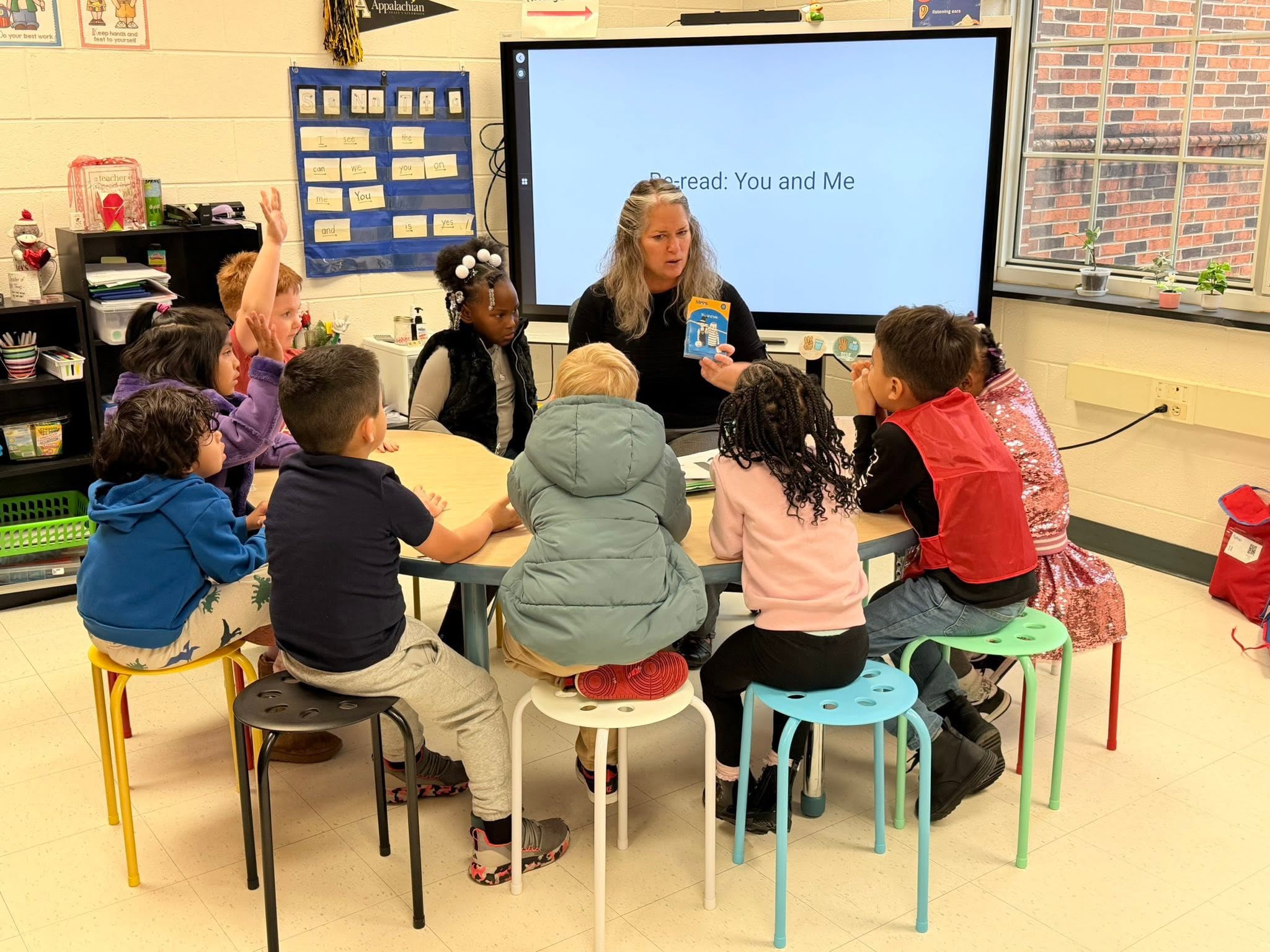
K–1 Appalachian State University Academy at Middle Fork Interventionist Marla Cantrell ’21 ’24 works with students in small groups. Photo submitted
As part of its continued improvement efforts, the academy has also:
- introduced new state-approved curricula, including Dragonfly for reading instruction and enVision Mathematics for mathematics instruction — both of which align with the North Carolina Standard Course of Study and provide targeted instruction designed to help students meet and master grade level standards;
- developed and refined an instructional framework focused on collective efficacy, data-driven decision-making, co-teaching and student mastery;
- moved to a four-day instructional week with protected instructional blocks and a fifth day focused on enrichment, personalized learning, university and community engagement, and teacher planning;
- increased the focus on grade-level standards, student mastery, academic stamina and rigorous instruction;
- implemented professional development pathways that allow teachers to choose and lead professional learning based on their interests, strengths and instructional needs;
- continued standards-based grading to provide families with more detailed information about student progress and instructional needs;
- sustained instructional and leadership practices developed through the Innovative Partnership Grant, including strategic staffing, co-teaching and distributed leadership; and
- partnered with the Center for Assessment to develop an innovative accountability framework that more fully captures student growth, achievement and the impact of the Academy at Middle Fork’s instructional model. The center is also working with NCDPI on efforts to reimagine North Carolina’s school accountability system.
“We are incredibly proud of our students and teachers, and we are excited about what these results suggest about the long-term impact of our model,” said Snow.
Hatfield-Sidden added, “Behind every percentage point is a child who is learning and growing and an educator who has worked incredibly hard to help that child be successful. These results give us so much to celebrate and, just as importantly, a strong foundation to continue the work that is already making a difference for our students.”
What do you think?
Share your feedback on this story.

About the Academy at Middle Fork
The Appalachian State University Academy at Middle Fork, located in Walkertown, North Carolina, is a free public lab school serving students in grades K–5. The academy provides a balanced education through the implementation of research-based practices, state-of-the-art literacy instruction and exemplary classroom instruction and administration. Learn more about the Academy at Middle Fork at https://middlefork.appstate.edu.
About the Reich College of Education
Appalachian State University offers one of the largest undergraduate teacher preparation programs in North Carolina, graduating about 500 teachers a year. The Reich College of Education enrolls more than 2,000 students in its bachelor’s, master’s, education specialist and doctoral degree programs, with offerings that span multiple fields — from teacher preparation, counseling, and therapy, to higher education, school and student affairs administration, library science, educational leadership and more. With over 10,000 alumni employed in North Carolina public schools, there is at least one Reich College graduate in every county in the state. Learn more at https://rcoe.appstate.edu.
About Appalachian State University
As a premier public institution, Appalachian State University prepares students to lead purposeful lives. App State is one of 17 campuses in the University of North Carolina System, with a national reputation for innovative teaching and opening access to a high-quality, cost-effective education. The university enrolls more than 21,000 students, has a low student-to-faculty ratio and offers more than 150 undergraduate and 80 graduate majors at its Boone and Hickory campuses and through App State Online. Learn more at https://www.appstate.edu.