Shutterstock/Irina Bg image
BOONE, N.C. — Flu season is approaching its peak in Western North Carolina, and Appalachian State University is taking measures to ensure the health and welfare of its students.
Dr. Taylor Rushing, medical director of and staff physician in Appalachian’s M.S. Shook Student Health Service, shared data from the North Carolina Department of Health and Human Services that show reported activity for influenza-like illness during the past two years (2016–17 and 2017–18) reached its highest point in mid-to-late February, with 2018–19 activity following a similar trajectory.
Some of the symptoms of influenza:
- A sudden onset of fever (101 F to 104 F).
- Body aches.
- Headache.
- Nasal congestion, sore throat and/or cough.
- Weakness and/or fatigue.
- Loss of appetite.
While symptoms can be treated with over-the-counter medications, rest and plenty of fluids, Rushing advised if a student is significantly ill, with a high fever and any difficulty breathing, evaluation is encouraged.
“If flu is diagnosed in the first 48 hours, Tamiflu — a prescription antiviral that can lessen the severity and decrease the duration of the virus — can be offered,” Rushing said. “Tamiflu is never mandatory for treatment, however. The Centers for Disease Control and Prevention does not advise treatment for healthy young adults, but they do mention it is reasonable to consider for people of any age who are severely ill.”
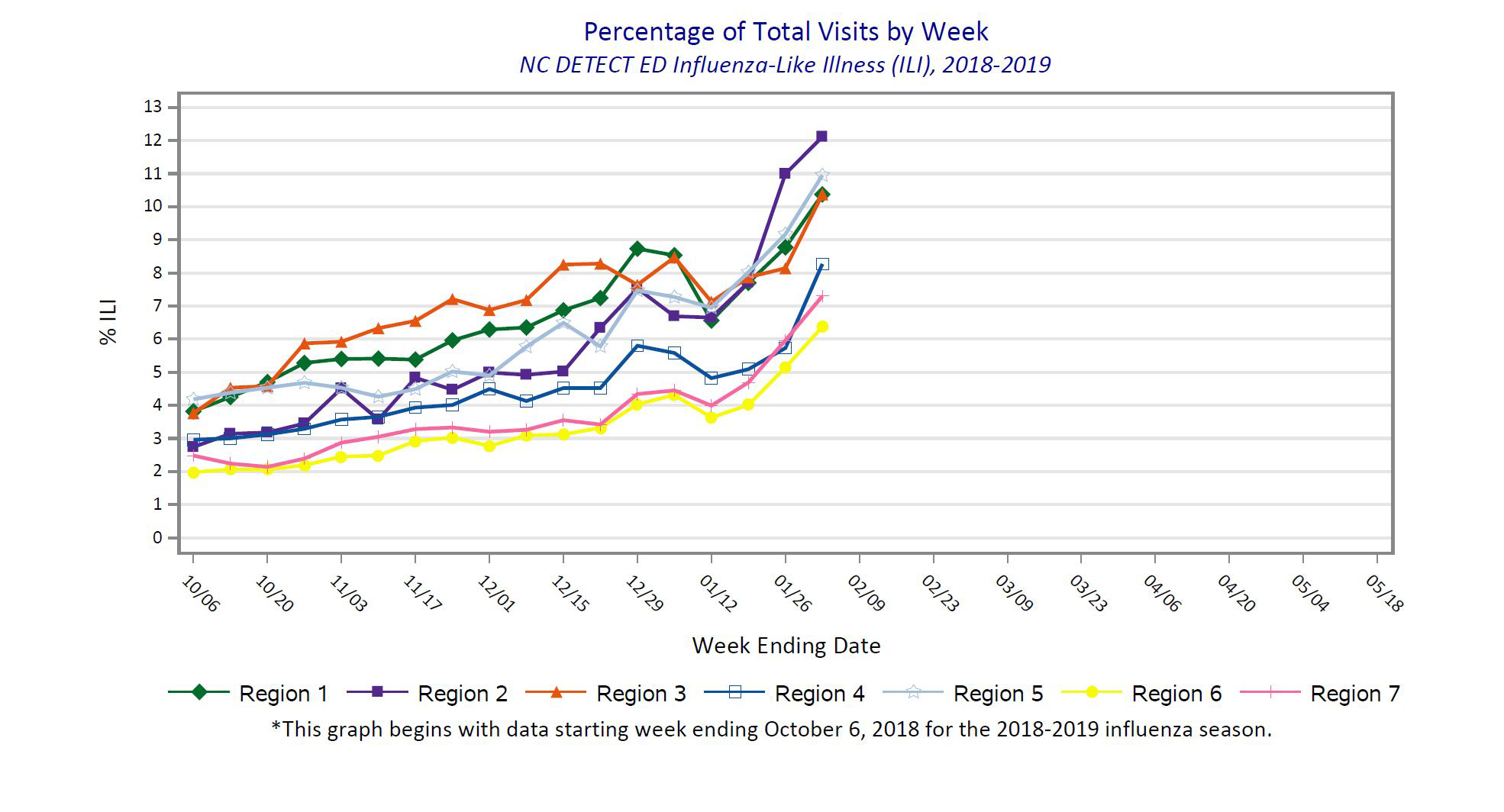
This chart, published in the North Carolina Weekly Influenza Summary for the week ending Feb. 2, shows Region 5 (Northwestern North Carolina, including Watauga County) had the second highest percentage of doctor visits for influenza-like illness. North Carolina Department of Health and Human Services illustration
An ounce of prevention
“It is not too late to get a flu shot, though it does take two weeks to get maximum immunity after the shot,” Rushing said.
Flu vaccines are still available at the Student Health Service clinic at a cost of $20 each.
Individuals are encouraged to take measures to protect their own health:
- Get vaccinated.
- Wash hands frequently and thoroughly with antibacterial soap and water for 15–30 seconds.
- Avoid touching your face. Your eyes, nose and mouth are entryways for viruses.
- Keep clean — frequently disinfect doorknobs, faucet handles, computer keyboards and mice, cell phones and other touchpoints.
- Practice healthy habits — stay hydrated, get plenty of sleep and exercise.
The custodial staff in Appalachian’s Physical Plant are disinfecting high-touch items in common areas — desks, light fixtures, countertops, elevator buttons, door handles and more — on a daily basis. Hand wash stations are cleaned daily and stocked more frequently, as hand-washing is particularly important during a flu season.
Appalachian’s Environmental Services technicians use disinfectant wipes specially formulated to kill viruses, particularly influenza. They also use a hospital-grade spray disinfectant in combination with microfiber products for more effective cleaning.
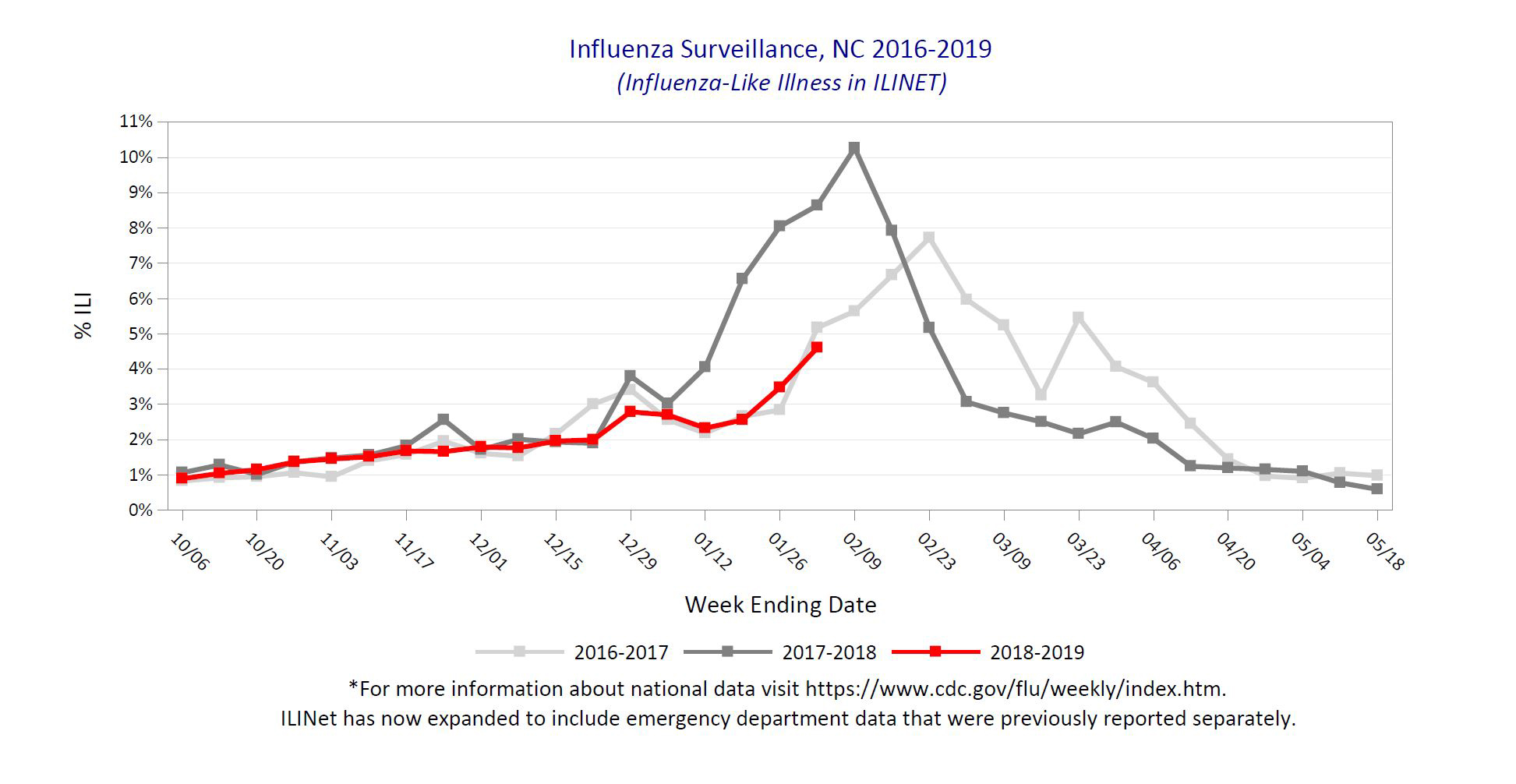
This chart displays a three-year comparison (2016–17, 2017–18 and 2018–19) of influenza surveillance in North Carolina, as reported by the Centers for Disease Control and Prevention in the North Carolina Weekly Influenza Summary for the week ending Feb. 2. The data show that influenza-like illness in 2019 is on the rise, moving toward the peak that occurred in mid-to-late February during the previous two years. North Carolina Department of Health and Human Services illustration
What do you think?
Share your feedback on this story.
About Student Affairs at App State
Student Affairs at App State supports student success and well-being by fostering a culture of care, inclusion and engagement. Its mission is to develop lifelong learners and dynamic leaders through meaningful experiences that challenge and support students. Grounded in a commitment to care, engage and transform, Student Affairs creates a student-centered environment that encourages resilience, leadership, service and global learning. Student Affairs encompasses the following units: Campus Activities, Case Management, the Child Development Center, Community-Engaged Leadership, Counseling and Psychological Services, Office of the Dean of Students, New Mountaineer and Family Engagement, Off-Campus Student Services, Plemmons Student Union, Student Conduct, M.S. Shook Student Health Service, Student Legal Services, Student Veteran Services, University Recreation, and Wellness and Prevention Services. Learn more at https://studentaffairs.appstate.edu.
About Appalachian State University
As a premier public institution, Appalachian State University prepares students to lead purposeful lives. App State is one of 17 campuses in the University of North Carolina System, with a national reputation for innovative teaching and opening access to a high-quality, cost-effective education. The university enrolls more than 21,000 students, has a low student-to-faculty ratio and offers more than 150 undergraduate and 80 graduate majors at its Boone and Hickory campuses and through App State Online. Learn more at https://www.appstate.edu.




![Science Says I’ve Been Jumping My Bike Wrong For 30 Years [faculty featured]](/_images/_posts/2026/09/jumping-my-bike-600x400.jpg)

![NC universities ranked by free-speech advocacy group [faculty and staff featured]](/_images/_posts/2026/09/free-speech-advocacy-600x400.jpg)