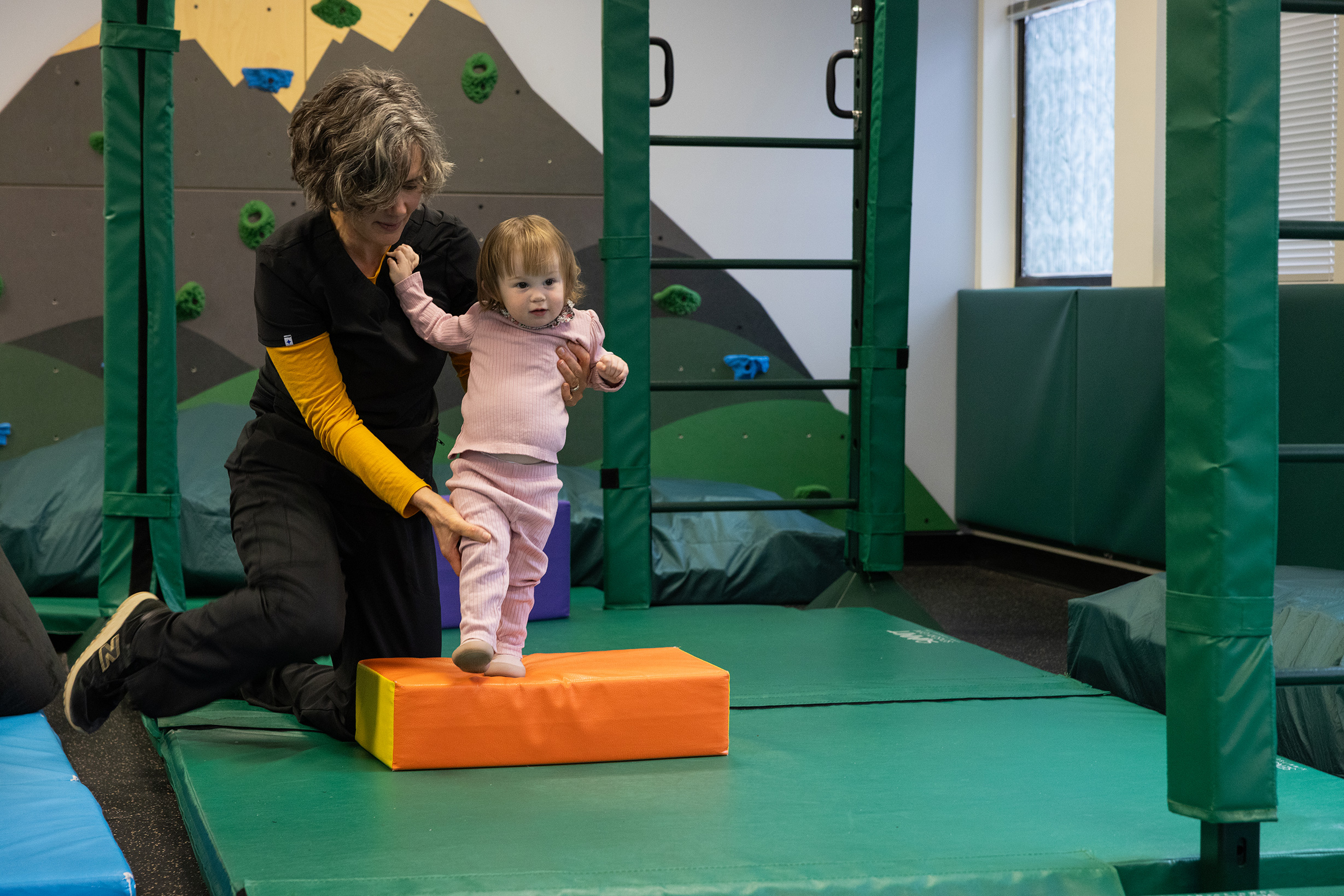
Chelsea Cannon, a physical therapist and practitioner-in-residence at App State’s Growing Well High Country Developmental Clinic, works with a clinic patient to assess their gait and balance. The Growing Well High Country Developmental Clinic, which provides expert diagnosis and treatment for children with developmental delays, is expanding its operations this spring thanks to $2 million in grant funding from Vaya Health. Photo by Chase Reynolds
BOONE, N.C. — With the opening of Appalachian State University’s Growing Well High Country Developmental Clinic, children experiencing developmental delays — from speech and language hurdles to motor skill challenges — can receive expert diagnosis and treatment close to home. The clinic will expand its operations this spring, providing greater access to care thanks to $2 million in funding support from Vaya Health.
Part of the Appalachian Institute for Health and Wellness (App Well) in App State’s Beaver College of Health Sciences, the Growing Well High Country Developmental Clinic serves infants and children up to age 5 who may be experiencing developmental delays — providing early screening, evaluation and guidance so that patients can receive timely treatment services. The clinic has screening tools and diagnostics for any developmental condition, including cerebral palsy and autism.
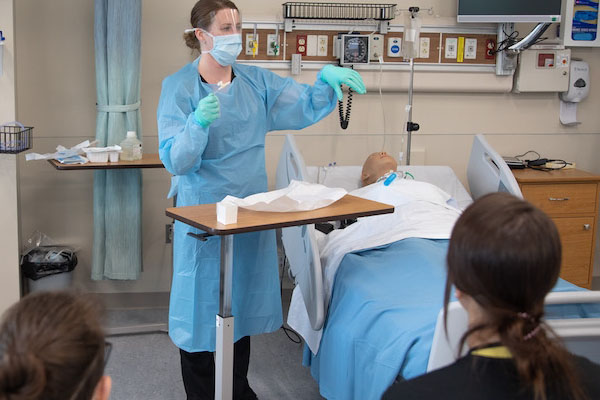
The clinic also serves as a training site for App State students pursuing careers as future health professionals in pediatrics, rural health and developmental care, with students learning alongside and under the mentorship of clinicians, all while providing patient-centered care.
“We are expanding access to essential pediatric care that has the potential to transform the lives of children and families throughout Northwestern North Carolina,” said App State Chancellor Heather Norris.
She added, “We are proud to continue developing partnerships, like this one with Vaya Health, that serve our communities while preparing the next generation of leaders to make meaningful differences in the quality of life for the people of our region, state and beyond.”
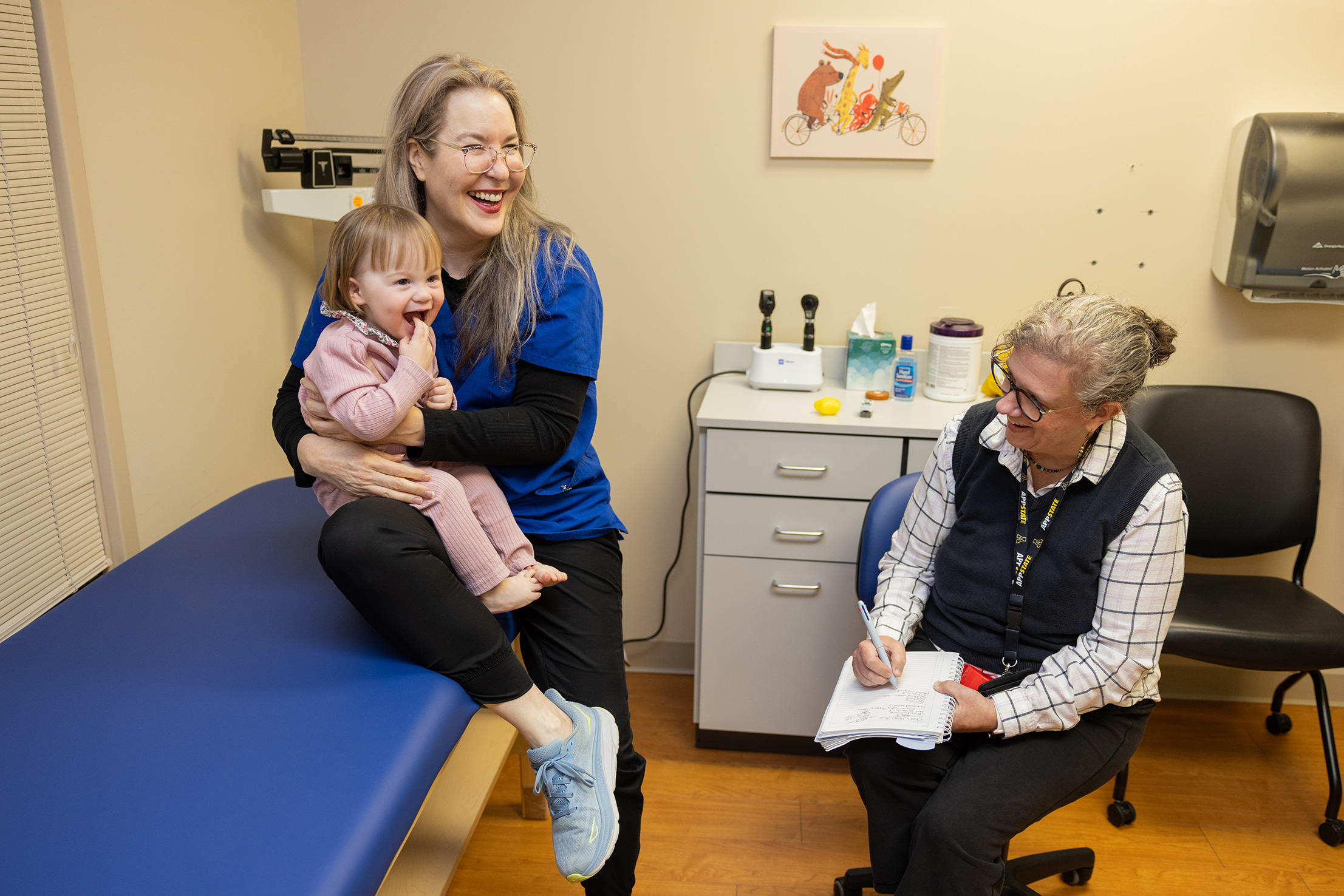
Dr. Nathalie Maitre, affiliate faculty at App State and professor of pediatrics at the Emory University School of Medicine, left, holds a patient during an examination at App State’s Growing Well High Country Developmental Clinic, while Dr. Tricia Kinsey Masters, a pediatric nurse practitioner, observes and takes notes for the patient’s record. Maitre and Masters serve as clinical supervisors. Photo by Chase Reynolds
According to App Well Executive Director Dr. Gavin Colquitt, the clinic is the first of its kind in the nation to offer diagnosis and treatment outside of a traditional hospital setting, which is helping meet a significant need in the region.
“Before the clinic opened in 2025, the closest place families could see a specialist about their concerns was Charlotte or Winston-Salem,” explained Colquitt, who, supported by NCInnovation funding, is developing an interactive digital tool designed to identify and provide resources for children with developmental delays. “Often, they would be on a waiting list for six months to a year for an appointment, and they were left hoping for answers.”
Early diagnosis and treatment for neurodevelopmental conditions can make a profound difference in a child’s life, said Bryan Belcher, director of App Well’s Interprofessional Clinic.
“When you identify developmental delays early, especially around cerebral palsy and autism, you are able to establish a care pathway for the child that maximizes their behavioral and health outcomes for the future, improving their long-term quality of life,” said Belcher. “An early diagnosis can make a world of difference, providing a child the support they need to reach milestones such as walking independently — it’s amazing.”
The clinic, located at University Hall in Boone, receives referrals from pediatricians, neonatal intensive care unit providers, the North Carolina Infant-Toddler Program and community partners supporting early diagnosis and intervention for children — including local partner Children’s Developmental Services Agency of the Blue Ridge, which provides home-based therapy and family support.
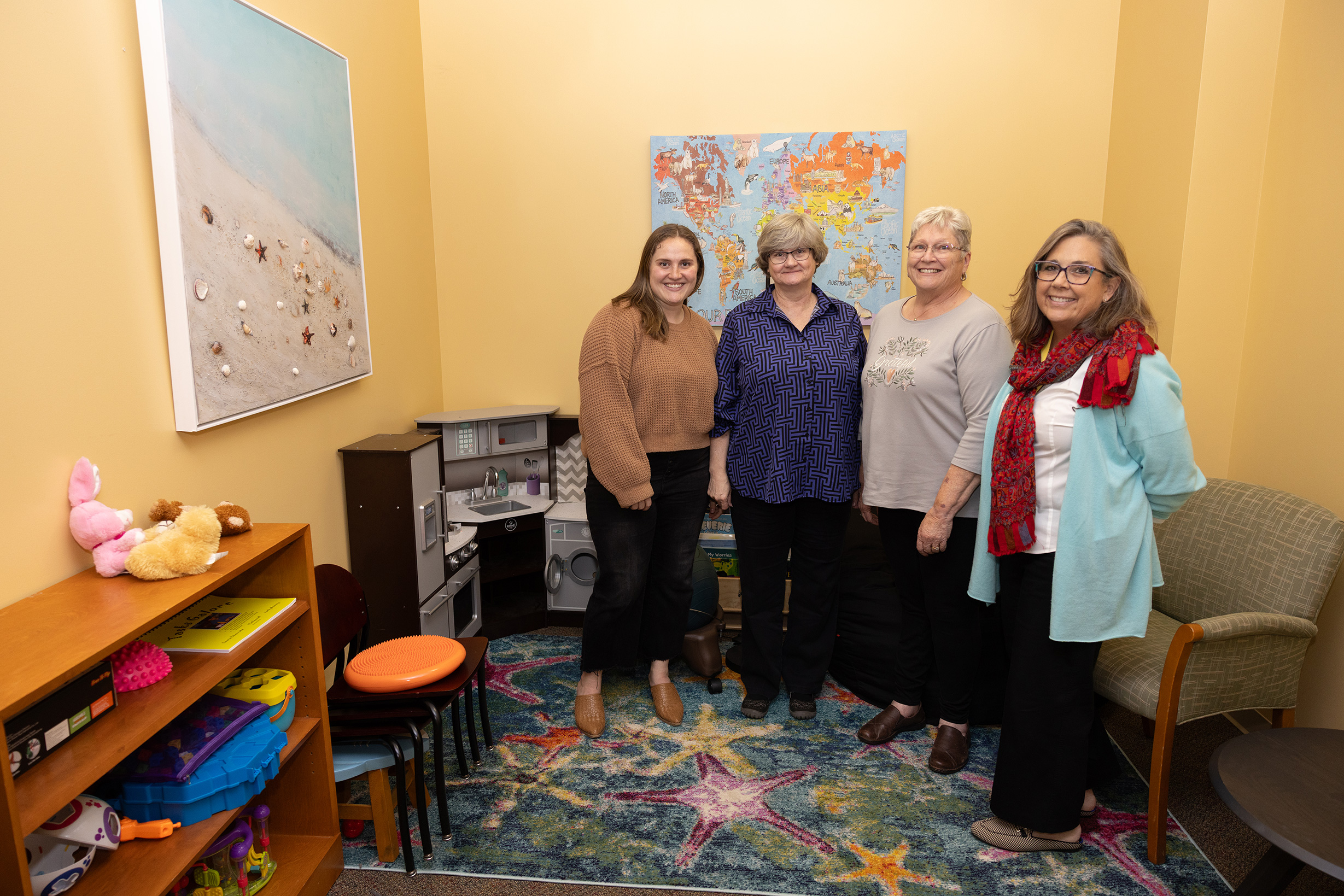
Pictured from left to right: Cassie McQuilling, Growing Well program coordinator and licensed clinical social worker, and Teresa Emory, Norma Bouchard and Kate Younger — all outreach coordinators in App State’s Parent to Parent Family Support Network-High Country program — are part of the team supporting the university’s Growing Well High Country Developmental Clinic. As family navigators, they are responsible for providing ongoing support to families and children during their clinical journey. Photo by Chase Reynolds

Logan Holmes, of Broadway, left, and Genna Newman, of Asheboro, both graduate students in App State’s speech-language pathology program, conduct a patient assessment at the university’s Growing Well High Country Developmental Clinic. In addition to providing expert diagnosis and treatment for children with developmental delays, the clinic serves as a training site for App State students pursuing careers as future health professionals in pediatrics, rural health and developmental care, with students learning alongside and under the mentorship of clinicians. Photo by Chase Reynolds
Expanding access to life-changing care
Bolstered by funding support from Vaya Health, the Growing Well High Country Developmental Clinic is expanding its operations to serve more regional children and families. Vaya Health is a specialty managed care organization and local government agency that oversees publicly funded health care services across a 32-county region of North Carolina for people with significant behavioral health needs, intellectual/developmental disabilities and traumatic brain injuries.
“Supported by Vaya Health’s generous financial commitment, the clinic’s expansion will exponentially increase our impact, as we work to remove critical access barriers to ensure infants and children receive the diagnosis and care they need,” said Colquitt.
The clinic, which became fully operational in 2025, currently operates two days per week, serving patients in a shared Interprofessional Clinic space in University Hall. The grant will allow the clinic to hire additional staff and offer appointments up to three days a week, beginning later this spring. Additionally, construction is underway to create a larger, dedicated clinical space on the second floor of University Hall, with this work scheduled to be completed by July.
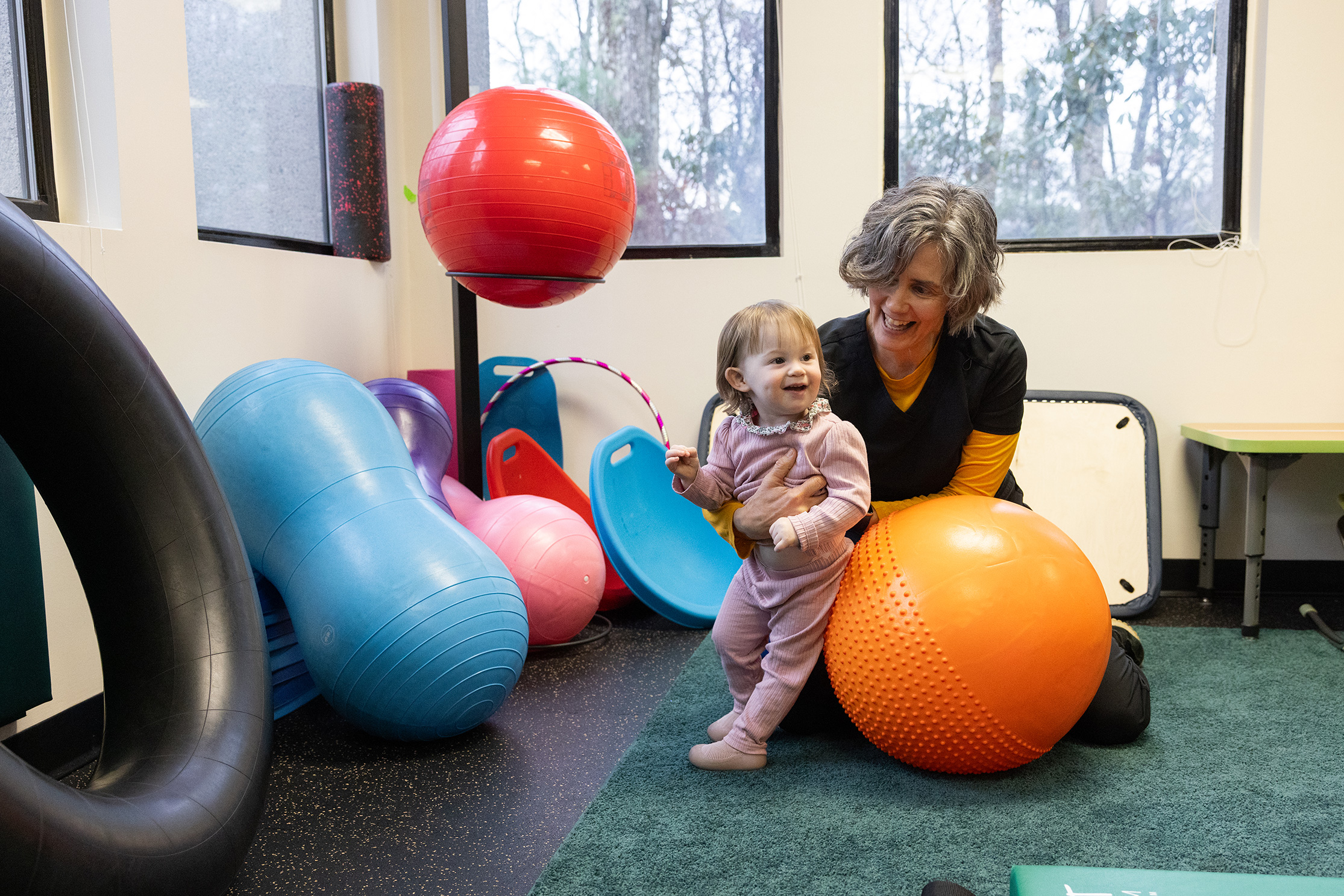
Chelsea Cannon, a physical therapist and practitioner-in-residence at App State’s Growing Well High Country Developmental Clinic, shares a smile with a young clinic patient. Photo by Chase Reynolds
Since the clinic opened, about 80% of the infants and children referred have received a diagnosis that led to additional treatment. A notable case involved a 2-year-old who was diagnosed with cerebral palsy through facilitated referrals.
“The infants and children who are coming to us are being sent because there are concerns, and the diagnosis rate shows those concerns are valid,” said Belcher, adding that “cerebral palsy has been the most common physical diagnosis, and autism has been the most common behavioral diagnosis in the patients we’ve seen.”
As operations expand, the Growing Well team plans to begin offering the Developmental Clinic at App State’s Hickory campus this spring, to provide additional care options for families and children in Catawba Valley. App Well leaders are working with health care providers in the region to establish referrals.
Also, the clinic has hired two clinical supervisors: a part-time medical director, Dr. Katherine Pearson, a local pediatrician with specialized training in neurodevelopmental care, and Dr. Tricia Kinsey Masters, a pediatric nurse practitioner who has worked in the Developmental Behavioral Pediatrics program at Brenner Children’s Hospital in Winston-Salem and in pediatric primary care in rural communities. Masters, originally from Boone, described her new role as a homecoming — her father is a retired App State history professor and she is a graduate of Watauga High School.
And social work graduate student Emily Frye, who is completing an internship at the clinic, will join the clinic’s staff after graduating from App State in May, serving as a social worker in App Well’s Growing Well program.
For more information about App State’s Growing Well High Country Developmental Clinic and its services, visit the clinic webpage and/or contact [email protected].
What do you think?
Share your feedback on this story.

About the Appalachian Institute for Health and Wellness
The Appalachian Institute for Health and Wellness (App Well) connects Appalachian State University to the community by supporting health and wellness research, interprofessional clinics and community outreach programs. The institute partners with the community to better prepare students to become exceptional practitioners who will continue to address health issues and disparities throughout the region and beyond. Learn more at https://appwell.appstate.edu.
About the Beaver College of Health Sciences
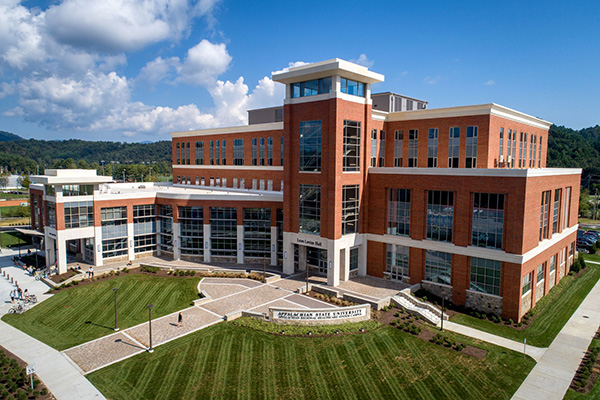
Appalachian State University’s Beaver College of Health Sciences (BCHS), opened in 2010, is transforming the health and quality of life for the communities it serves through interprofessional collaboration and innovation in teaching, scholarship, service and clinical outreach. The college enrolls more than 3,600 students and offers 10 undergraduate degree programs, nine graduate degree programs and four certificates across seven departments: Kinesiology, Nursing, Nutrition and Health Care Management, Public Health, Recreation Management and Physical Education, Rehabilitation Sciences, and Social Work. The college’s academic programs are located in the Holmes Convocation Center on App State’s main campus and the Levine Hall of Health Sciences, a state-of-the-art, 203,000-square-foot facility that is the cornerstone of Boone’s Wellness District. In addition, the college supports the Appalachian Institute for Health and Wellness and has collaborative partnerships with the Wake Forest University School of Medicine’s Physician Assistant Program, UNC Health Appalachian and numerous other health agencies. Learn more at https://healthsciences.appstate.edu.
About Appalachian State University
As a premier public institution, Appalachian State University prepares students to lead purposeful lives. App State is one of 17 campuses in the University of North Carolina System, with a national reputation for innovative teaching and opening access to a high-quality, cost-effective education. The university enrolls more than 21,000 students, has a low student-to-faculty ratio and offers more than 150 undergraduate and 80 graduate majors at its Boone and Hickory campuses and through App State Online. Learn more at https://www.appstate.edu.
![NC universities ranked by free-speech advocacy group [faculty and staff featured]](/_images/_posts/2026/09/free-speech-advocacy-600x400.jpg)

![Nepal’s Hydropower Industry Was Booming. Now 900 Workers Are Missing. [faculty featured]](/_images/_posts/2026/08/hydropower-industry-600x400.jpg)